Marketing a coworking space used to be about hosting happy hours and posting photos of latte art. In 2026, that isn't enough.
The market has matured. Competition is fierce, and the customer journey has changed. Today's members—whether they are freelance creators or enterprise satellite teams embracing hybrid work—expect instant booking, seamless digital experiences, and clear value propositions.
If you are trying to fill your desks manually, you are already behind. Here is the step-by-step guide to building a marketing engine that attracts high-value members on autopilot.
1. Get Your Positioning Right Before You Promote
Most marketing fails because the space isn't clearly positioned. You cannot be "everything for everyone."
Define your niche: Are you a "Creator Hub" with podcast studios? A "Legal & Professional" suite with soundproof offices? Or a "Parent-Friendly" space with childcare?
Solve specific problems: Don't sell "desks." Sell "an escape from a noisy home," "a professional address for client meetings," or "a community that cures isolation."
The One-Sentence Promise: Crystallize this into a tagline you use everywhere (e.g., "The only workspace in Austin designed for AI startups").
2. Build A High‑Converting Website (Or Use a Platform)
Your website is not a brochure; it is a vending machine. If a user cannot book a tour or buy a day pass in two clicks, you are losing money.
The "Above the Fold" Rule: Show exactly where you are, who it's for, and a clear "Book a Tour" button immediately.
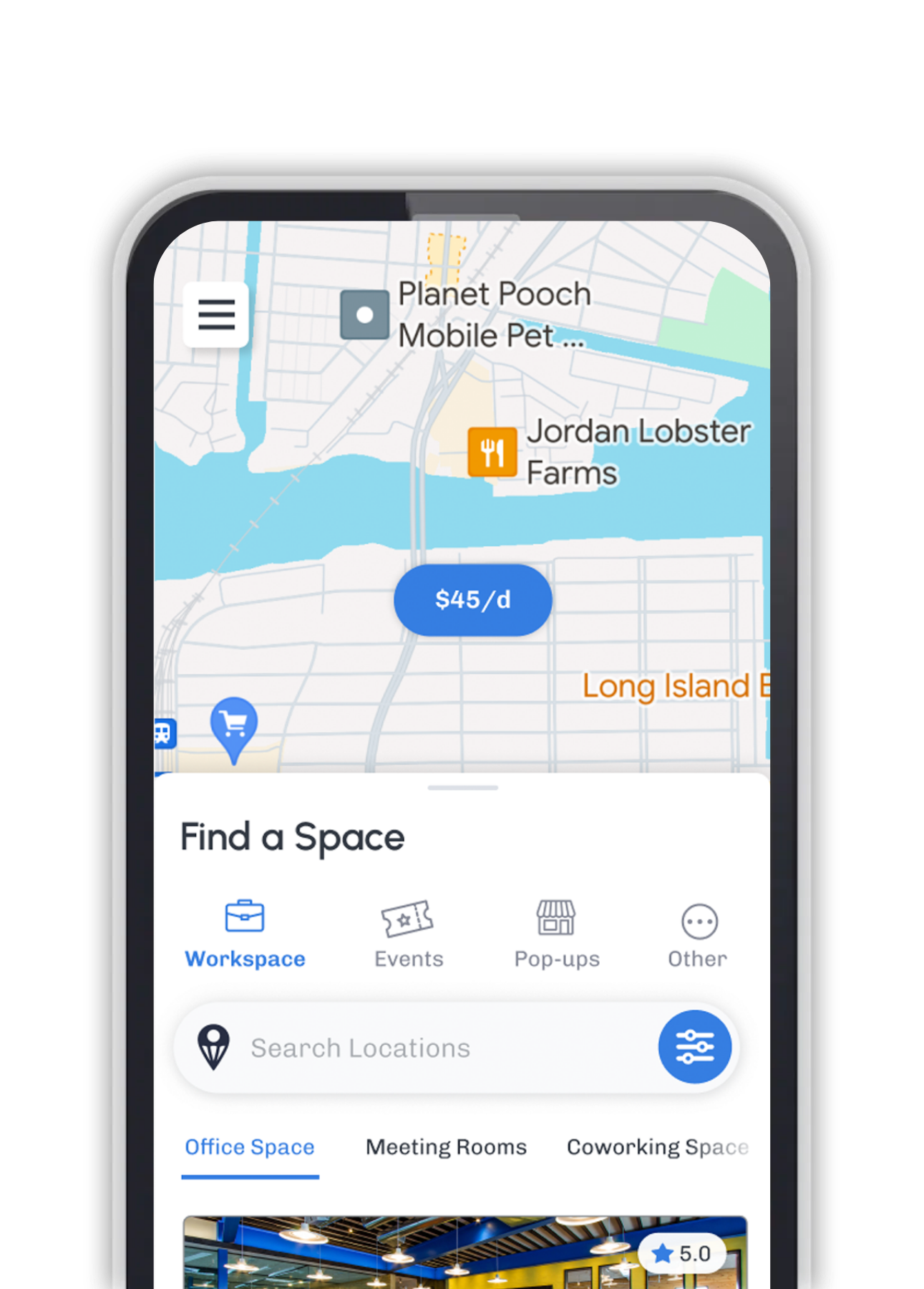
Don't Build from Scratch: Instead of spending thousands on custom WordPress development, use a white-label workspace platform (like DropDesk) embedded directly into your site. This handles inventory, billing, and bookings automatically, turning your website into a transactional tool.
Social Proof: Embed a live feed of Google Reviews and logos of current member companies.
3. Master Local SEO + AEO (Answer Engine Optimization)
You still need classic local SEO, but AI "Answer Engines" (like ChatGPT and Google Gemini) now matter just as much.
Google Business Profile (The "Products" Hack): Most spaces list their amenities under "Services." Instead, list Day Passes, Meeting Rooms, and Private Offices as "Products" on your Google profile. This gives them a price tag and a "Buy" button directly in search results.
AEO Strategy: Add an FAQ section to your site answering specific questions like "How much is a private office in [City]?" or "Is there pet-friendly coworking near [Neighborhood]?" This helps AI tools pull your content as the direct answer.
Review Automation: Don't rely on memory. Set up an automation where every time a guest Wi-Fi user logs off or a meeting room booking ends, they receive a text asking for a 5-star review.
4. The Aggregator Strategy: Get Listed Everywhere
In the hotel industry, you have Expedia. In coworking, you have aggregators and marketplaces.
Don't Be "Off-Grid": Corporate employees often use booking platforms to find space rather than Google. If you aren't listed on major networks, you are invisible to this high-budget traffic. Learn how to list your space today.
Partner with DropDesk: By joining the DropDesk network, your inventory becomes visible to a national audience of remote workers and corporate teams, driving revenue without you lifting a finger on ad spend.
5. Pivot to B2B Sales (Employer Outreach)
Growth in 2026 is driven by employers, not just freelancers. Selling one contract for a 10-person satellite team is more efficient than finding 10 individuals.
The Offer: Create specific "Satellite Office" or "Hybrid Team" packages. Offer unmatched flexibility (e.g., "Access for 10 employees, but you only pay for 5 desks").
The Outreach: Build a list of local companies that have gone "remote-first." Reach out to their HR or Operations Directors offering a free "Team Offsite Day" to get them into the building.
6. Video & User-Generated Content (UGC)
Video is the best way to convey "vibe," but professionally produced videos are expensive.
Incentivize UGC: Turn your members into your marketing team. Put a sign in the kitchen: "Post a Story tagging us and show it to the Community Manager for a free specialty coffee."
The "Virtual Tour" Reel: Pin a 60-second, vertical video tour to the top of your Instagram and TikTok. Walk through the entry, the coffee station, the private offices, and the phone booths. This answers the question "What does it feel like?" before they ever visit.
7. Run Targeted Ads (Search + Social)
Paid campaigns can fill your pipeline while your SEO ramps up.
Search Ads: Bid on high-intent terms like "Meeting room rental [city]" and "Day pass coworking [city].". Send traffic to a landing page with a specific offer (e.g., "First Day Free").
Network Ads: When you partner with a platform like DropDesk, you benefit from our aggregated ad spend. We run campaigns to attract remote workers to our network, lowering the Customer Acquisition Cost (CAC) for every individual partner space.
8. Nurture Leads Automatically
Most people don't join the same day they tour. The money is in the follow-up.
The Welcome Sequence: Set up a 3-email sequence for new leads.
- Day 0: "Thanks for touring. Here is a recap of pricing."
- Day 2: "Member Story: How [Company X] grew their team here."
- Day 5: "Still looking? Come in for a free trial day."
Use a CRM: Don't use a spreadsheet. Use a CRM built for workspaces (included in DropDesk) to track who has toured, who has signed, and who has churned.
9. Use Events as Acquisition Engines
Events are the fastest way to get physical foot traffic into your space.
Host, Don't Just Rent: Host "Founder Nights," "Freelancer Tax Workshops," or "AI Tools Tutorials."
The "Hook": Always offer a same-day incentive. "Thanks for coming to the workshop! If you sign up for a membership within 48 hours, you get 50% off your first month."
10. Track the Metrics That Matter
Stop looking at "Likes" and start looking at Revenue.
- Lead-to-Tour Rate: Are your ads working?
- Tour-to-Member Rate: Is your space (or sales script) working?
- Occupancy by Type: Are your private offices full but your hot desks empty? Adjust your marketing spend to target the gaps.
The "Quick Wins" Checklist
Can't do everything at once? Do these 5 things this week.
- Claim & Verify: Ensure your Google Business Profile is verified and updated with high-res photos.
- Add Products: Add "Day Pass" and "Meeting Room" as Products on your Google Profile.
- Get Listed: Submit your space to the DropDesk Marketplace to tap into national demand.
- Automate Reviews: Create a QR code at the checkout desk that links directly to your Google Review page.
- Post One Reel: Film a 30-second "Morning Routine at [Space Name]" video and post it to Instagram/TikTok.

Graham Beck
Graham Beck is the Co-founder and CEO of DropDesk, a platform dedicated to a singular, transformative mission: unlocking the potential of underutilized spaces to foster human connection.